 Maison Privé
Updated November 2026 · By Maison Privé Experiences, private experiences in Madrid since 2019
Madrid is one of the best bases in Europe for day trips. Within one or two hours you can reach medieval walled cities, a Roman aqueduct, a royal monastery and a village built entirely from black slate. This guide compares the best options — with approximate travel times, who each one suits, and how to do it without fighting train timetables.
| Destination | Distance & travel time* | Best for | Time needed |
|---|---|---|---|
| Toledo | ~70 km · 35 min by fast train, about 1 h by car | History, first-time visitors | Half or full day |
| Segovia | ~90 km · 30 min by fast train, about 1 h by car | Roman aqueduct, fairytale castle, roast suckling pig | Full day |
| Ávila | ~110 km · about 1 h by car, 1–1.5 h by train | Intact medieval walls | Half to full day |
| El Escorial | ~50 km · about 1 h by car or train | Royal monastery, mountain air | Half day |
| Aranjuez | ~50 km · about 50 min by car or train | Royal palace and gardens, best in spring | Half day |
| Alcalá de Henares | ~35 km · about 40 min by train | Cervantes’ birthplace, easy and cheap | Half day |
| Chinchón | ~45 km · about 1 h by car or bus | Wooden-balcony Plaza Mayor, long lunch | Half day |
| Patones de Arriba | 68 km · about 1 h by car | Authentic slate village, couples, great food | Full day (about 7 h with us) |
*Approximate times; traffic and train timetables vary.
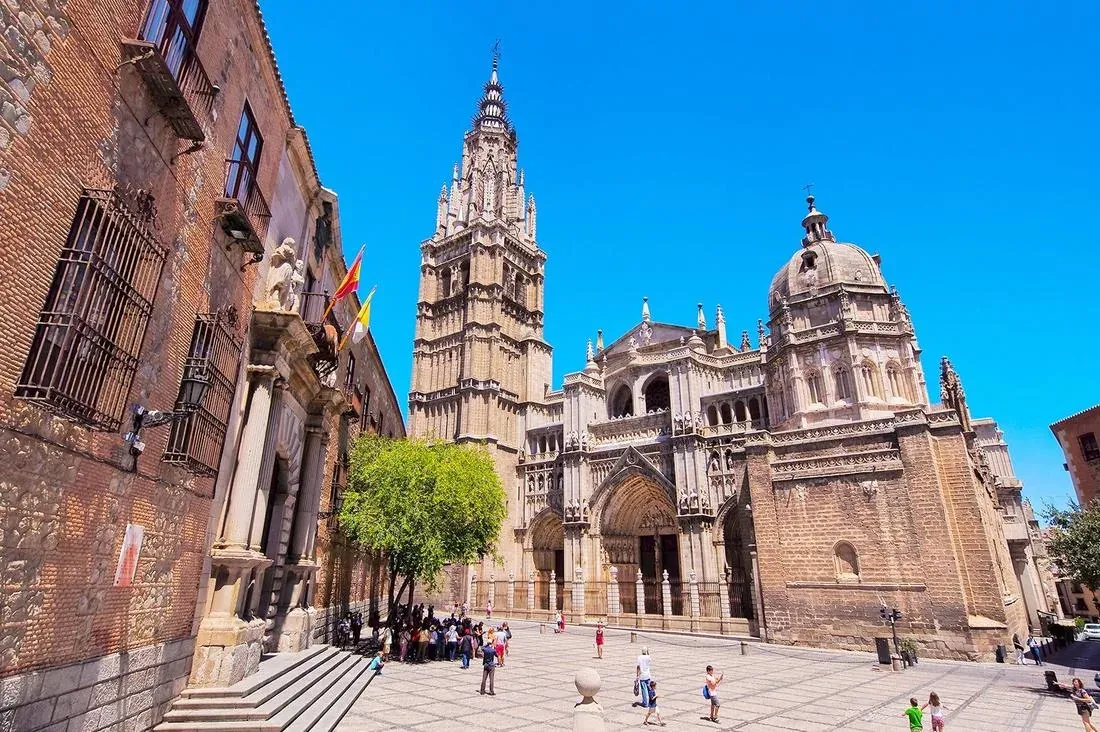
Toledo is the first answer for most first-time visitors, and for good reason. Known as the city of three cultures — Christian, Jewish and Muslim lived side by side here — the whole old town is a UNESCO World Heritage Site. You can visit the cathedral, the Alcázar, two medieval synagogues and a small mosque within a few streets. The streets are steep and cobbled, so wear comfortable shoes. The fast train takes about 35 minutes, but a private driver saves you the station transfers and the uphill walk from the stop.
Do it with us: a private Toledo day trip with hotel pickup, an official guide and entrance tickets — half day from €846 or full day from €1,100 per group.
Segovia has one of the best-preserved Roman aqueducts in the world, a castle that looks straight out of a fairytale, and a cathedral known as the “lady of Spanish cathedrals”. It is also the home of cochinillo, roast suckling pig, so plan a long lunch. The fast train takes about 30 minutes, although the station is a few kilometres outside the old town. Segovia sits at about 1,000 metres, so it is noticeably colder than Madrid in winter.
Ávila is famous for more than two kilometres of intact medieval walls, and you can walk part of them. It is compact, so half a day is enough, but at around 1,100 metres of altitude it is cold and windy in winter. A good choice if you love history and don’t mind a quiet day.
Built in the 16th century by King Philip II, the Royal Monastery of San Lorenzo de El Escorial combines a monastery, a palace, a library and the royal pantheon. It is a UNESCO World Heritage Site, and the setting at the foot of the Guadarrama mountains is a pleasant change from the city. Check opening days before you go: many monuments close on Mondays.
Aranjuez is the spring day trip: the Royal Palace, formal gardens and tree-lined avenues form a UNESCO cultural landscape, and the area is known for its strawberries and asparagus. It is easy to reach by commuter train and works well as a half-day outing.
The birthplace of Miguel de Cervantes is a UNESCO-listed university city with a long arcaded main street. The commuter train takes about 40 minutes, so it is perfect if you want an easy half day on a budget.
Chinchón is best known for its main square, surrounded by wooden balconies, and for its anise liquor. It is small, so think of it as a relaxed lunch with a short walk rather than a sightseeing marathon.
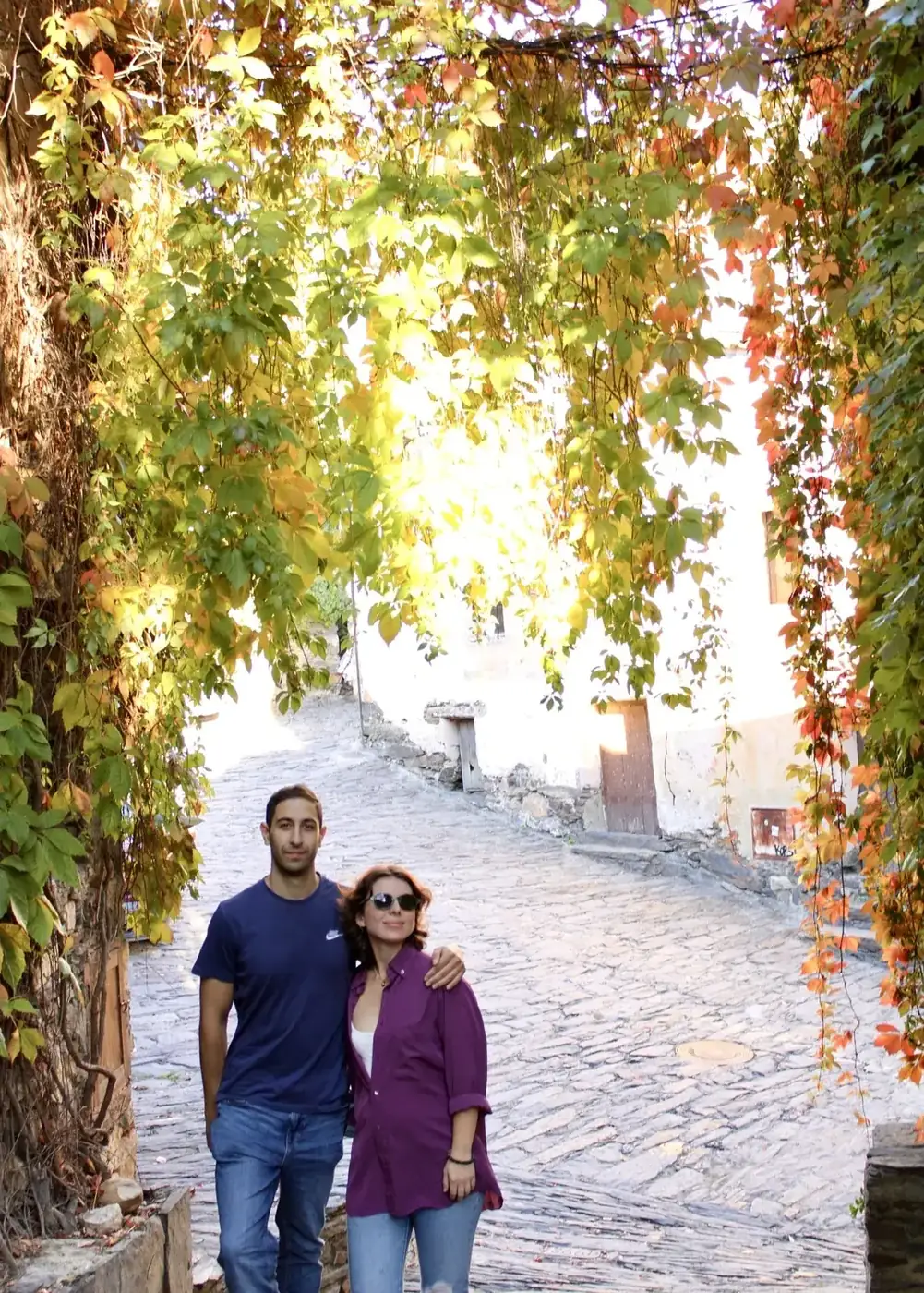
Patones de Arriba is, in our opinion, the most authentic village near Madrid. Its houses, walls and lanes are built from dark slate, and legend says it was so well hidden in the mountains that it governed itself as an independent kingdom until the 18th century. It is not a mass-tourism destination: you share the lanes with locals and a few walkers, and the traditional mountain cooking is excellent. It is perfect for couples, families and celebrations.
One honest warning: the village is built on a steep hillside with uneven cobblestones, so it is not recommended for people with reduced mobility.
Do it with us: our private Patones day trip includes a private driver, a guided walk and lunch from €600 for two. For something more romantic, the Madrid Romantic Escape adds flowers at pickup (from €700), with an optional private winery tasting (from €900).
Cuenca (famous for its hanging houses) and Salamanca (its golden stone university city) are possible on the same day by fast train, but they are long days. Many travelers prefer to stay overnight.
Train and bus are the cheapest options and work well for Toledo, Segovia and Alcalá. The trade-offs are fixed timetables, transfers from the station to the old town, and no one to explain what you are seeing.
A private driver and guide costs more, but you leave from your hotel at the time you choose, skip the transfers, and can combine places that public transport does not connect well — Patones, for example, has no practical train service. It is also the easiest way to travel with children, older relatives or a group.
Hotel pickup, private driver and guide. Toledo from €846 per group · Patones de Arriba from €600 for two.
See Toledo & book → See Patones →Toledo is the most popular choice: it is close, compact, UNESCO-listed and full of history. Segovia is a close second, especially for the Roman aqueduct and the local food.
About 70 km. The fast train takes around 35 minutes and the drive takes about an hour.
It is not recommended. They are in different directions from Madrid and each deserves at least half a day. Choose one, or plan two separate days.
Patones de Arriba is a quiet, romantic slate village about an hour from Madrid. Aranjuez, with its palace and gardens, is also lovely in spring.
Toledo, El Escorial and Alcalá de Henares are good in winter. Segovia and Ávila sit at higher altitude and are colder and windier.
It costs more, but you leave from your hotel at your own pace, avoid transfers and can reach places that are hard by public transport, such as Patones de Arriba. It also suits families, older travelers and groups.
Have a question?
Write to us and we'll help you plan your perfect experience.
Contact via WhatsApp →